Schema Watch
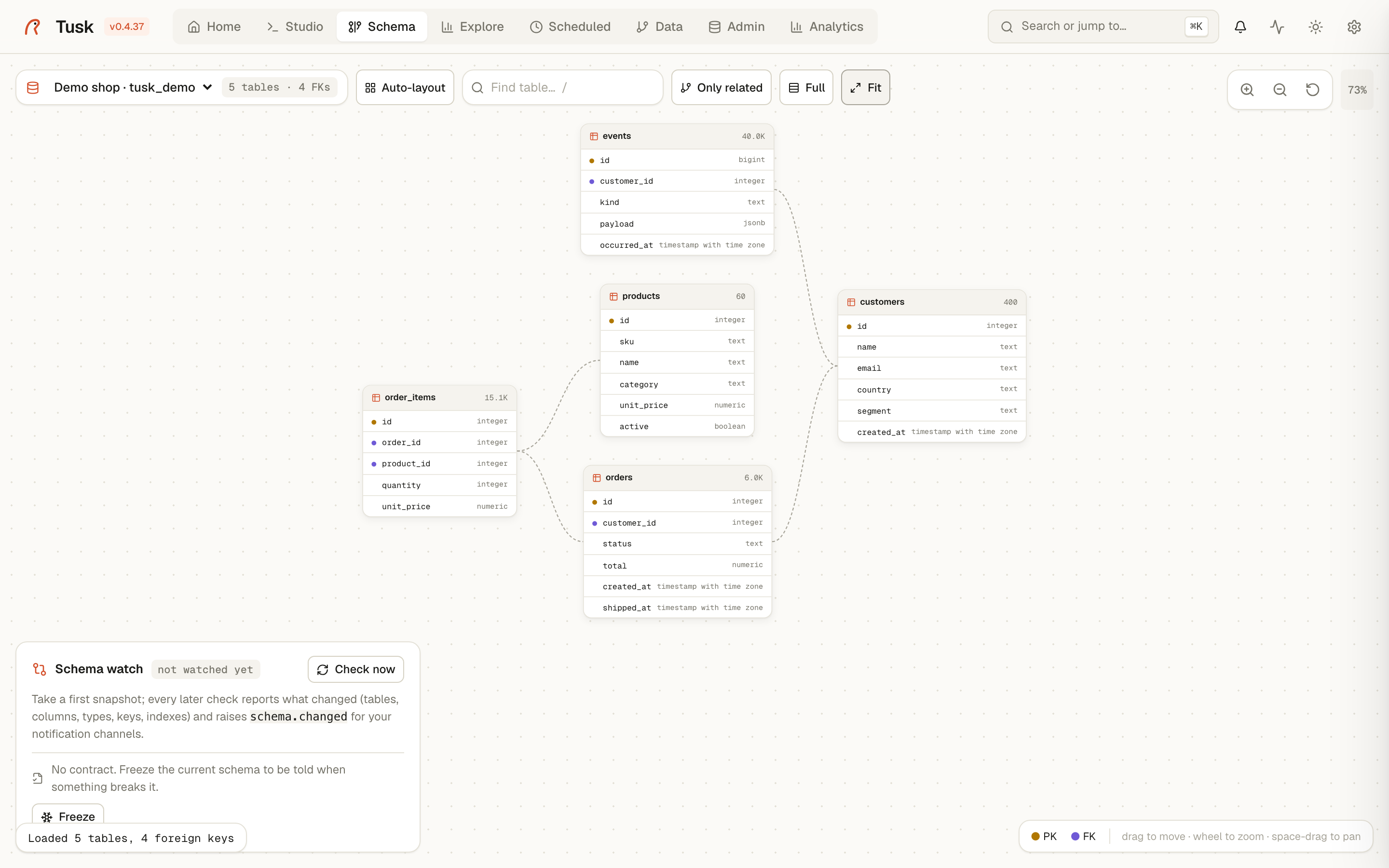
Schema Watch takes a snapshot of a PostgreSQL connection's catalog — tables,
columns with types and nullability, primary and foreign keys, indexes —
compares it with the previous snapshot, keeps the history, and raises a
schema.changed notification when something moved.
It is the foundation of Data Contracts: a contract is "the schema I expect", and Schema Watch is what notices when reality drifts.
Turn it on
Scheduled → New job → Schema watch, pick the connection, choose a cron (daily at 06:00 by default). The first run takes a baseline and reports nothing; every later run reports the diff.
To be told about changes, subscribe a channel to Schema Changed under Notifications → Subscriptions. The message is a one-paragraph summary:
orders: + column status text; orders.total: NOT NULL added;
- table legacy_imports; customers: + index customers_email_idx
with the connection name in the title and the structured diff in the context (webhooks get the full JSON).
Check on demand
On the Schema page the Schema watch panel shows the last snapshot,
the recent changes for the selected connection and a Check now button.
The same is available to agents through the MCP tool schema_changes:
"What changed in production since yesterday?"
and through the API:
POST /api/schema-watch/{connection_id}/run
GET  /api/schema-watch/{connection_id}/status
GET  /api/schema-watch/{connection_id}/changes?days=30
What counts as a change
| Detected | Example |
|---|---|
| Table added / removed | + table invoices |
| Column added / removed | orders: - column legacy_code |
| Column type changed | orders.id: type integer → bigint |
| Nullability changed | orders.total: NOT NULL added / now nullable |
| Primary key changed | orders: primary key ['id'] → ['id', 'region'] |
| Foreign key added / removed | orders: - FK customer_id → customers.id |
| Index added / removed | orders: + index orders_status_idx |
Row counts, data and permissions are not part of the snapshot — that is what makes a check cheap enough to run every hour on a large database.
Storage and retention
Snapshots and changes live in ~/.tusk/tusk.db (with the rest of Tusk's own
state). The last 30
snapshots per connection are kept; change records keep their own copy of
the diff, so history survives pruning.
Limits
- PostgreSQL only (DuckDB/SQLite connections are skipped).
pg_catalogandinformation_schemaare excluded; every other schema is included, qualified asschema.tableunless it ispublic.- Manual runs are audited (
schema_watch.run); scheduled runs follow the job's own notify settings on failure.